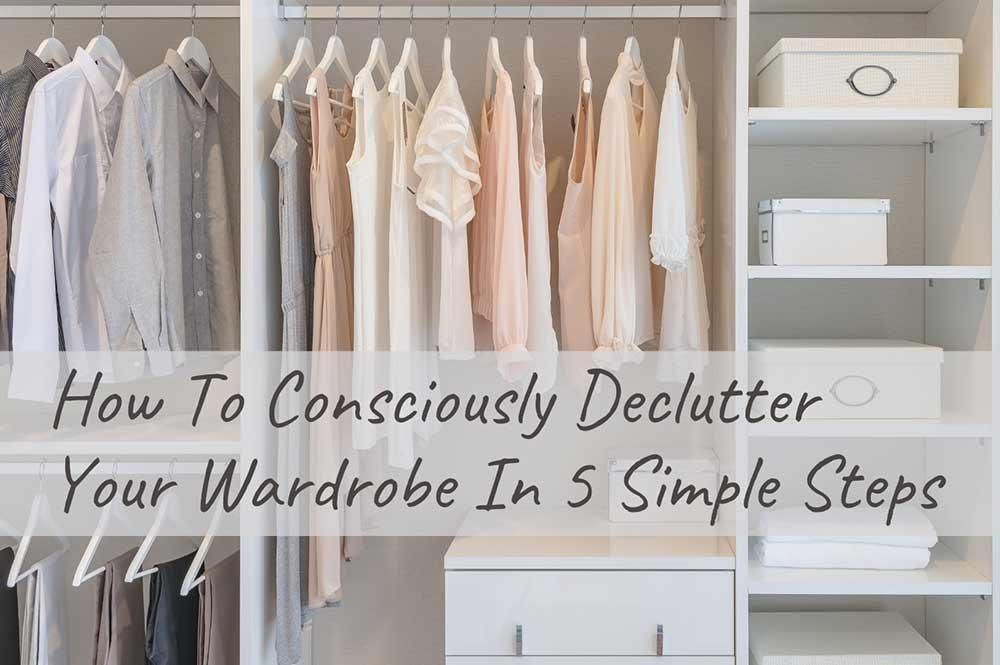
Wanting to know how to declutter your clothes and wardrobes consciously but struggling to find the best way to do it? We've got you covered with a quick and easy guide to make the whole process seamless, ethical, and as sustainable as possible.
We were feeling pretty inspired by #secondhandseptember, so I wanted to get ahead before I started my pledge to only shop preloved clothes, without any new items throughout the whole of September. Plus, my last wardrobe just recently fell apart on me, so after picking up a new one, I thought what better time to declutter this mess!
By sorting your clothes into 'groups', it makes knowing what to do with them all so much easier. To declutter clothes, I decided what their value should be based on the desirability, condition, and what the next steps to make were.
Now I have finally consciously decluttered my wardrobe both ethically and in a sustainable way, I thought what better thing to do than to show you how to do exactly the same!
How To Declutter Clothes & Wardrobes
Let's begin with the grouping...
Group 1 - Keep
Pretty straight forward, right? Gather everything you like, that is still in good condition, and that you wear regularly. Once your first group is complete, PUT THEM ALL BACK IN YOUR WARDROBE - they are all great clothes!
Once that's done, you're probably wondering what to do with everything else. Well, this time we're not going to dump them all on the charity shops. Charity shops are already overwhelmed with unwanted clothes, so rather than risk our clothes not even making it onto their rails, we're going to find other means of sustainably rehoming them.
Worry not! onwards to the next few groups.
Group 2 - Sell
Consider the minimum price you'd like for each item (that makes it worth selling) e.g £10
Then you want to go through all the remaining items left after group 1 and consider the following:
- Cost - how much did you pay for it?
- Desirability - will people likely want it?
- Condition - a small stain mght be ok, but no one is likely to buy clothes with holes in!
Considering all of the above, you'll need to come up with a value for your items. If the value is over your minimum price, list it online or on an app. Depop, Vinted and Preloved are all great places to sell your clothes online.
Struggling to sell once you;ve got them online? Thrift+ lets you send clothes to their warehouse and they sell it for you!
And if the value falls below your minimum price, move them on to one of the next few groups...
Group 3 - Donate
So you have items that aren't worth selling? When you consider the postage costs, listing fees etc, some items just aren't worth it for < £10 when decluttering your clothes.
You can give these away to friends and family, donate to a charity shop, and even Thrift+ will take your unwanted clothes and make a donation to the charity of your choice for you.
You can even list them on local social media groups to see if anyone wants to take them off you.

Group 4 - Rent Out
There are some great ways to 'rent' out some of your beloved clothes and bags, and we think it's a really fantastic idea.
If you have some items that are in good condition and are desirable, someone out there may want to rent it from you. This is particularly great for 'occasion' clothes.
Peer-to-peer rentals are becoming more and more popular, with sites like byrotation offering some great rentals. And these aren't exclusive to clothes...you can rent out bags and accessories as well.
This is also great if you're looking for something special for a one-off occasion and don't want to buy something new - see if you can rent something first!
Group 5 - Upcycle
If you've made it this far and you've built yourself 4 groups of clothes, give yourself a pat on the back! You're on your way to becoming an expert at how to declutter clothes.
Anything you now have left should be those bits in less-than-ideal conditions - possibly with holes, rips or stubborn stains. Now its time to get creative!
Try your hand at making some face coverings with old t-shirts and fabrics. Not the creative type? Turn your old fabrics into rags and cloths to use around the home by trimming them into smaller pieces, or donate them to schools or animal shelters that will put them to good use.

Wardrobe Decluttered
Hopefully, after you've completed that declutter, you'll be feeling pretty dam good with yourself - and so you should! Left feeling inspired but haven't taken on the #secondhandseptember challenge? Its not too late to get on board, and use the next 4-5 weeks buying only preloved!
And if you're into sustainable fashion like us, check out our recent post about our favourite UK brands support slow and sustainable fashion



0 comments