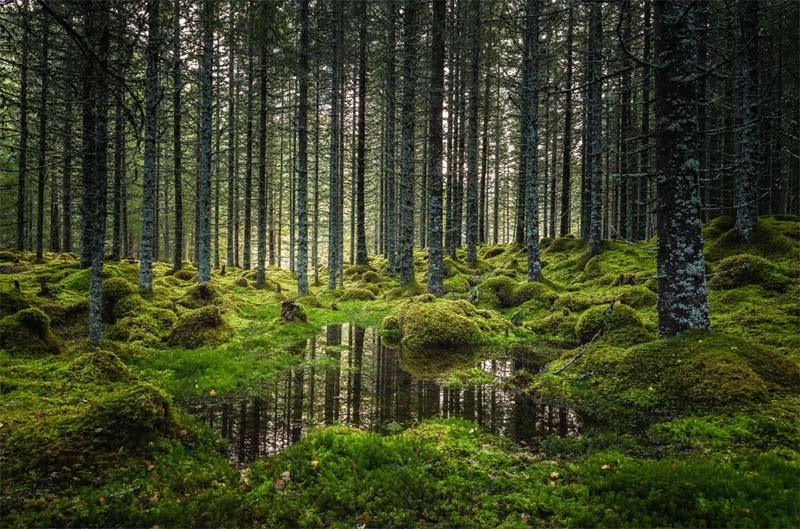
Trees are everywhere in the UK. Whether it's in parks, lining streets, in private gardens, or in the forests and woodlands that make up around 13% of UK land, trees make up a big part of all of our environments. As you might expect then, laws and governing bodies in the UK take our trees very seriously, and there are lots of measures in place to make sure that trees of all different types are taken care of appropriately, especially when it comes to things like which trees can be used for timber, and how trees are treated when planning any sort of development project.
Here, we take a look at how trees are protected when it comes to UK laws, and just why it is so important that they are:
How Trees Are Looked After in UK Law
There are various ways that trees can be protected, depending on who they belong to and what type of tree they are. There are Conservation Orders that protect trees in certain areas that are either a significant part of the natural environment in that area in their own right, or that are very important as habitats for the local bird or animal life. There are regulations around how trees on private land (for instance, in someone’s garden) can be removed or repaired. There are also rules about which trees can be felled for timber, and at what rate. Planting new trees is highly incentivised, and generally, whenever trees do have to be removed or are used as a resource, planting more trees is required - both as a means of ensuring the sustainability of trees as a natural resource, and to maintain or improve the biodiversity in an area.
One key area where the protection of trees is focal in UK law is when it comes to getting permission to develop on land. If someone, whether it’s a private individual looking to build a home or a commercial or public entity, wants to start a building project, they need to get planning permission, and this will always require the trees on the land to be taken into consideration. If there are trees, then tree surveys are necessary, and these are conducted by expert ecologists called arboriculturists, like this specialist company.
Tree surveys are used to do things like determine how close to a tree structures can be built, or if a tree can be removed. Under UK planning law based on the Environment Act, any building project has to provide at least a 10% net gain when it comes to the biodiversity of the land being developed, so even when trees are removed as part of a project, the project will need to include provisions to plant more trees or relocate the trees somewhere else. Ecologists work with people looking to perform development on land to allow them to make plans that will meet these requirements and protect the trees.
How Trees Are Categorised
Tree surveys categorise a tree as either category A, B, C, or U. The category of a tree determines how it can be treated when it comes to things like planning for developments.
Category A is the highest category of tree and is reserved for trees that are not only seen as very important, for reasons that can be ecosystem related, cultural or environmental, but are also healthy and projected to live for at least 40 years. When there is a Category A tree on some land, it is very unlikely that any sort of planning permission will be granted for developers to do work close to the tree, including work below ground that could disrupt its roots. Permission to remove the tree will be essentially impossible to get except under very unusual circumstances, and so any development projects would either be denied planning permission or would need to have strategies to work around the tree, including the routes planned for workers to access the site. Most trees like this are in places that are protected in other ways as natural or historical sites anyway, so while this may sound extreme, it isn’t a problem for developers very often.
Category B applies to the majority of large, healthy trees, such as the ones you may see lining streets. These can often be considered as relevant to their environments, despite not having the same individual significance as Category A. They will be expected to live for at least 20 more years. Here, preservation of the trees is generally very desirable; however, under some circumstances, removal of them can be agreed to, though usually with the caveat that more trees will be planted.
Category C refers to small trees, or those that are in fairly poor health - though a Category C tree is expected to live for another 10 years at a minimum. Usually, the presence of Category C trees doesn’t deter planning permission from being given to developers, but it can often be a requirement that new trees are planted if these have to be removed for the project.
Category U are trees that pose no issue to development, and which it may even be better to remove because they are already dead, or are dying, or pose a risk to safety.
Why Trees Are So Important
Trees are given this much thought because they are important for so many reasons. They provide oxygen and absorb CO2. They are vital to the habitats of all kinds of flora and fauna. They are a renewable resource for building and fuel. And they are also important to us for less quantifiable reasons, such as making our surroundings more visually appealing, and giving us the beautiful woodland environments so closely associated with the natural side of the UK. Most people can think of reasons why trees, or even a specific tree, might be important to them, and why they are glad that they are protected carefully by UK law.
So, as you can see, trees are highly valued and well looked after in the UK, and this is definitely a good thing.