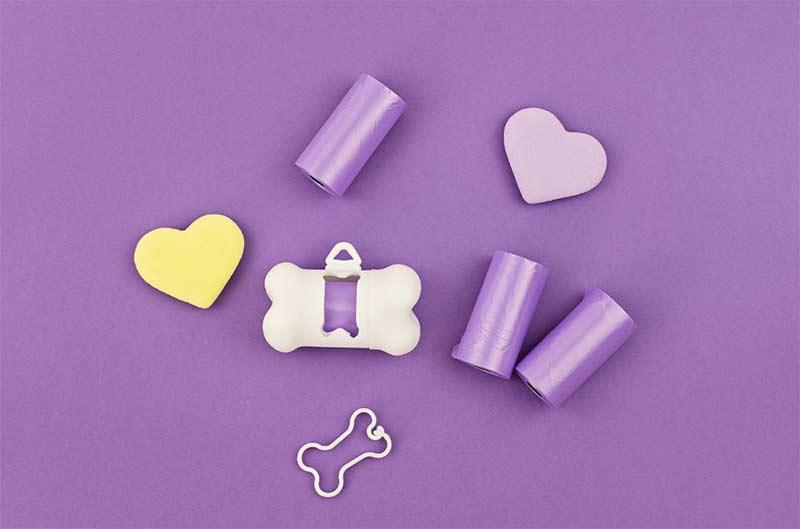
One would hope that when you’re spending extra time and money to better clean up after your dog, you would get just that. But when it comes to the majority of biodegradable waste bags, according to the FTC, manufacturers of dog waste bags “may be deceiving consumers with the use of their unqualified ‘biodegradable’ claim.”
And there are several ways they can get away with it too!
If you use biodegradable poop bags to clean up after your dog or cat, this article is a must-read if you don’t want to continue to throw your money away.
What Does Biodegradable Mean?
First, the most important thing to know about the term 'biodegradable' is that it doesn't always mean that it’s good for the environment.
For example, there are many things we throw away in landfills that biodegrade into everything from climate change-causing greenhouse gasses to toxic chemicals that pollute waterways.
Second, the term 'biodegradable' only indicates that the item will break down into smaller components, but it does not indicate how long that takes. Compostable dog poop bags are usually a good indication that they will break down faster.
Why The Term Can Mislead You
As we learned above, the word biodegradable can be misleading as many people associate it with being good for the environment. And one of the reasons that are such a popular misconception is because so many companies use the term to greenwash their products.
Greenwashing is a misleading claim that deceives consumers into believing the product or the company is environmentally friendly. For example, a dog waste bag may be advertised as compostable, but in actuality, it is only able to break down in an industrial compost facility. When the company doesn’t include that latter part, they are considered to be greenwashing their product.
Because of this, more and more companies, such as Innovetpet, are moving away from putting 'biodegradable’ on their product packaging to avoid misleading consumers.
Best Way To Dispose of Dog Waste
Even when using the best biodegradable waste bags, you don’t really want to throw them away with your regular trash. This is because landfills do not provide a great environment for them to successfully decompose.
In fact, landfills, with their lack of oxygen and heavy compression design, are downright some of the worst places for pet waste to go. Here is what you can do instead when looking to help the environment.

Composting
Composting dog waste is a great idea, and it is probably the best way for us to get rid of dog waste.
It is completely safe to compost dog waste. However, you do need to take some precautions.
First, you never want to compose waste from a dog that isn’t up-to-date on their regular vaccinations and parasite control medication. Second, you need to ensure your compost pile is regularly reaching a temperature of 140 degrees F or higher. Doing this will kill any pathogen and other nasties that may have tried hitching a ride in your dog’s pooh.
Even when taking the necessary precautions, it’s often advised that you don’t use your dog’s waste to fertilize any crops you plant to consume. Flowerbeds, trees, your yard, and even your houseplants are all great options for dog waste compost.
If all that seems like too much work, responsibility, or just downright not feasible due to neighbours, but you’d still love to compost, you’re not out of luck. From industrial composting facilities that accept pet waste to hiring a removal company, those that live in highly populated areas or just don’t want to do the extra work can still take advantage of the most environmentally friendly way to dispose of pet waste.
Due to concern over the parasite Toxoplasma gondii, you should never attempt to compost cat waste at home.
Flushing
Did you know that the Environmental Protection Agency (EPA) recommends flushing your dog’s waste? This lets your sewage treatment plant handle all the dirty work for you!
Flushing your dog’s pooh is an excellent option as opposed to throwing it away with your regular trash. Just make sure you only flush the pooh and not in a bag that isn’t water-soluble.
Burying
As we saw with the other options, burying your pet’s waste will be a better option for some people than others. Pet waste should be buried a minimum of 5 inches deep, with 12 inches being the goal.
You will want to bury it in multiple spots around your yard, but make sure to never bury pet waste too close to your garden full of vegetables and fruits.
What To Look For When Shopping For Dog Poop Bags
Remember, even with the best biodegradable pooh bags science can invent, the landfill is going to be terrible for them, and instead, you should seek out one of the options we discussed above.
The best biodegradable and compostable dog poop bags are made from plant starches and other food-based polymers such as proteins, polysaccharides, and peptides.
After you’ve confirmed the materials that were used to create the bag, you want to look for a few certifications.
First, look for the DW2 certification, which indicates a compound has been added to waste bags to speed up the decomposition process from 20 years to 2-5 years.
Second, look for ASTM D6954-04, which indicates that a biodegradable product should biodegrade in less than 2 years without leaving any residues that may be harmful to the environment.
These waste bags are often not flushable, so make sure to not flush them along with your dog’s waste if you plan on going with that option.
Final Words
While it’s more than a minor annoyance, taking the time to ensure your eco-friendly dog poop bag is just that, it is well worth the effort. Improper removal of pet waste is a major cause of pollution. Not only does it frequently get into waterways where it kills aquatic life, but it can also find itself in places where it can make us sick.