By implementing low-cost actions to save water in your business, you could reduce your household and organisation’s water costs by as much as 30%, according to NI Business Info. Three billion litres of perfectly good drinking water is wasted in England and Wales every day, and businesses contribute significantly to this figure.
You’re probably already taking measures to cut your water use, including using refillable water bottles. But you might still be wondering how to cut water consumption further, and take a more serious approach around your home and in your business so that you can cut your business costs and save this precious resource. So, grab a coffee and let’s find out how...
1. Avoid washing half-loads
Has the current trend in hybrid working meant you’ve only got a handful of staff members in the office every day? The problem with this is that people will be used to putting the dishwasher on daily, without thinking about whether it’s full or not.
A typical dishwasher uses 9.5 litres of water per load. If you haven’t got a full load, start putting the dishwasher on every other day rather than daily. This will save hundreds of litres of water over the course of a year. Another option is to put a splash of water in a bowl and wash up by hand with an eco-friendly soap bar.
Similarly, if your business has things such as sheets and towels that need washing, make sure you only wash full loads. You should also check that items like this are getting their full use before being washed.
2. Review your landscaping
The driest summer since 1935 has resulted in parts of the UK being in a drought this year. Understandably, many Brits are concerned about the impact of climate change which is why 75% of consumers say that choosing to buy from businesses that prioritise sustainability is important to them.
Your backgarden or business’s landscaping is a great way to show your friends and customers that you take sustainability seriously and want to reduce your company’s water consumption. Drip irrigation systems and in-ground irrigation systems can be used to ensure the right amount of water is being used on plants.
It’s also possible to use sensors that predict upcoming rainfall, so you don’t waste water when significant rainfall is expected. You may also want to conserve water by using water butts.
3. Make small water efficiency changes
Some taps can use 40 litres of water in a minute. This provides plenty of opportunity for wasted water, such as when employees are chatting and forget to turn the tap off.
Installing tap aerators on all taps is a good way to reduce water consumption. They simply fit onto the end of the taps. When they’re put on, the water mixes with air, so less water is needed.
Another option is to install automatic sensor taps that turn on when they detect a hand, glass, or similar, and turn off when it’s moved away. You can even save water by changing one-flush toilets in your staff bathroom to dual-flush toilets. A simple device added to the cisterns of your toilets will reduce the amount of water used per flush. This is ideal for toilets in business premises that are used a lot and a great way to reduce water consumption.
4. Check for leaks
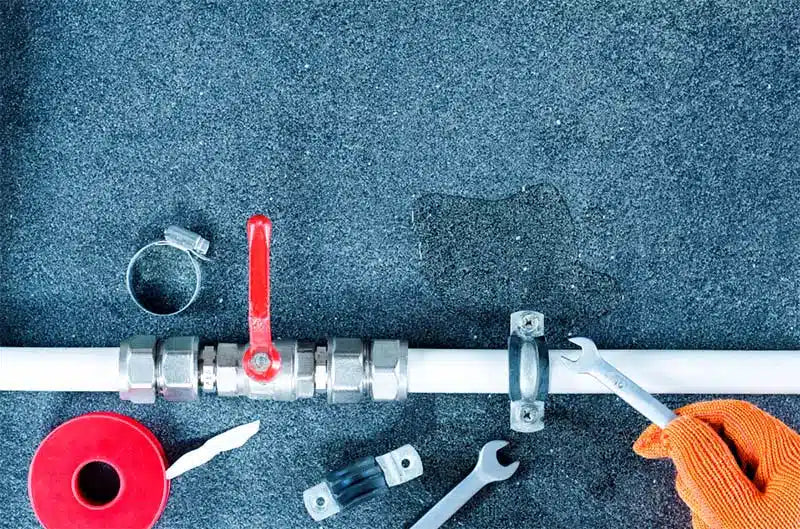
1,180 Olympic swimming pools could be filled with the amount of water that is lost every day in the UK due to leaking pipes and taps. Yet, this is one of the easiest and cost-effective ways to conserve water.
A leaking pipe will cost your business more than just lost water as you’re also likely to get damp, mould, wall cracks, a lingering bad smell, damaged paint work, and water stains. This looks bad on your business, especially if you have customers visiting your premises.
The best thing you can do is routinely check for leaky pipes and taps and take steps to repair them immediately if you're serious about reducing water consumption...and your bills.
5. Reduce water pressure
High water pressure may be the cause of leaking pipes. It’s also bad for the environment as it reduces the lifespan of appliances, including your business’s dishwasher and boiler. If your water pressure is too high, hundreds of litres of water will be wasted when your employees fill up their insulated water bottles, wash their hands, fill up the kettle, and similar. A simple way to check your water pressure is to use a water pressure gauge. A small commercial building should have a water pressure of one to three bars. The lower it is, the less water your business will use. But you don’t want it to be so low that it frustrates your employees or affects the way your business runs.
Water conservation is a serious strategy that every business and household should implement. so now you know how to reduce water consumption for both your business and around the home, you’ll save money on rising costs of bills, help to conserve this valuable resource, and may even increase your customer base for your business.