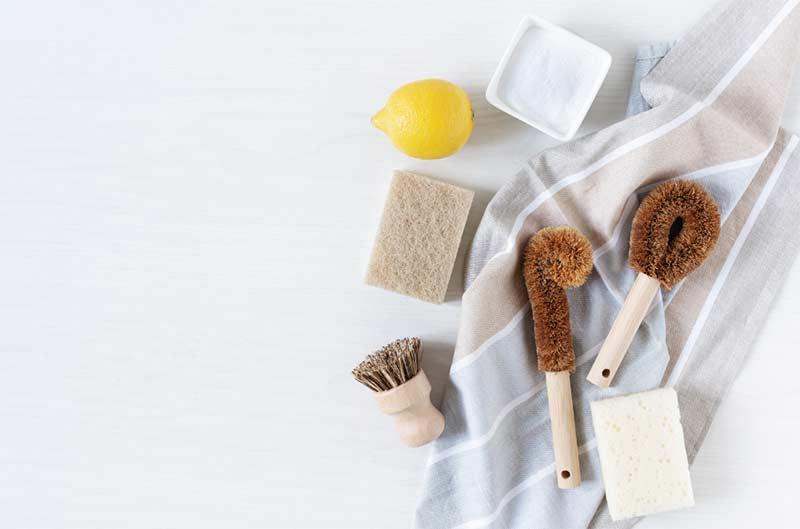
With so many companies now offering eco-friendly cleaning products, it can be very tricky to know that what you’re buying is actually a good quality, responsibly sourced, ethically-made eco-friendly product. After all, it is fair to assume that a lot of companies might be jumping on the eco-friendly bandwagon with these cleaning solutions.
It is always worthwhile doing some research into eco-friendly companies. Finding out where they source the ingredients in their cleaning products, whether they are using ethical methods of transporting these ingredients and their products, and what journey the products have before they reach your cleaning cupboard. This way, you can be sure that the cleaning products you buy are as eco-friendly as possible, and that you are not damaging the environment by using them.
Here are some more tips to help you know that the cleaning products you are buying are as eco-friendly as possible. What to avoid, best ways to buy and more!
Tips for ensuring you are using eco-friendly cleaning products
1. Buy local or in bulk
If you happen to have an eco-friendly company close to you that sells cleaning products that are made locally, this is a great way of knowing that those products do not have a huge carbon footprint. We would recommend trying to find good quality eco-friendly cleaning products that are made as locally as possible, in the UK preferably, or at the very least, Europe.
This means that the ingredients are not travelling worldwide, creating a massive carbon footprint and that the companies are following environmentally friendly laws and rules. Knowing where your cleaning products are made means that you are not adding to your carbon footprint and doing more damage to the environment than you realise.
Any company making truly eco-friendly cleaning products will happily tell you where its cleaning products are made, all the ingredients used, how responsible they are about sourcing the ingredients they use and how supportive of its workers they are. Clear and informative information about the entire process of making and delivering cleaning products allows you to see just how eco-friendly a product truly is.
If you have already fallen in love with a cleaning product that isn’t made too locally, you can buy it in bulk. Buying cleaning products in bulk is a great way of saving fuel, and packaging, which ensures that you always have your favourite cleaning products in your cupboard. It also reduces your overall carbon footprint and might even save you some money.
2. Spray bottles over aerosols
When you use cleaning products in aerosols, they release VOCs into the atmosphere. VOCs are very harmful to the environment and the ozone layer. This is because they absorb solar radiation and trap outgoing long-wave radiation in the atmosphere, which damages the ozone layer over time.
This is not because of the cleaning product inside the aerosol can, but the additives that help it leave the can. So, if your favourite cleaning product can be purchased in a spray bottle instead, this will be much better for the environment.
While most eco-friendly products available now are readily available in spray bottles, it is also worth looking for cleaning products that have refills too. This cuts down on your plastic waste as you can reuse the spray bottle repeatedly.
3. Reusable cloths
While having paper towels (kitchen roll) around the home can be handy for the occasional spill, using reusable cloths is much more eco-friendly for house cleaning on a regular basis. Now, these cloths could be simple tea towels that you use to clean up spills in the kitchen, or microfibre cloths that you can use for 99% of the cleaning around your home.
You can even extend this to buying a good old-fashioned mop rather than a modern one with throw-away heads. A lot of modern cleaning involves throw-away, single-use cloths, dusters, mopping heads and various other products.
By ensuring as much of your cleaning arsenal is reusable as possible, you can make a big difference in your impact on the environment. Plus, you will probably save some money as you won’t need to keep buying top-ups for all your cleaning gear too!
4. Recyclable packaging
Whether you reuse plastic spray bottles with refills from companies, or your cleaning products are delivered to your door in cardboard packaging rather than plastic, it all adds up. Lots of the mainstream laundry and dishwasher tablet manufacturers are now turning back to cupboard packaging as a result of the more eco-friendly companies making the switch, and this is a great step forward.
The packaging that your cleaning products come in is just as important as the cleaning product itself. Is the packaging recyclable? Is it reusable around the home? If the answer is no, then perhaps the cleaning products you are using are not as eco-friendly as they are making out.
Awesome examples of true eco-friendly cleaning products are the ones that offer a reusable spray bottle as standard (usually made from recycled plastic) that you can then add their cleaning products into each time you reorder them (they typically come as a tablet that you dissolve in water). This creates a lot less plastic waste, and each time they are delivered to your home, the packaging is only ever made from cardboard, which is endlessly recyclable. And you’ll be ordering these in bulk, you’ll have less packaging waste, and save yourself some money on postage costs too.
If you would like to ensure the cleaning products you are using are as eco-friendly as possible, give the tips above a try. Do not be afraid of researching the cleaning companies you are buying from, it’s the best way of ensuring that you are getting eco-friendly cleaning products from people that care about cleaning and the planet!